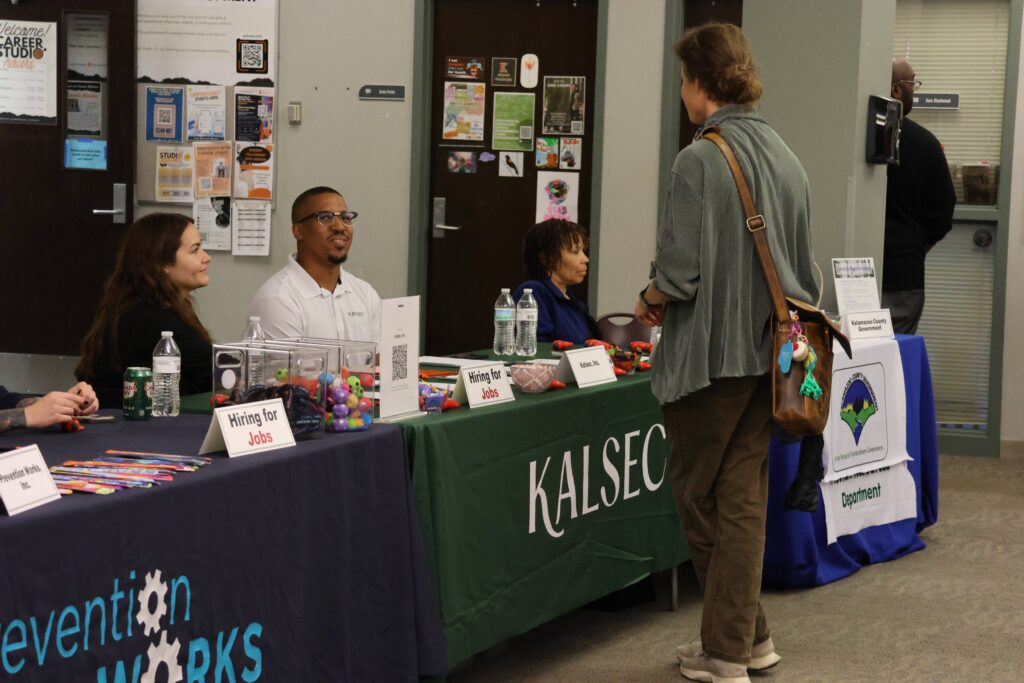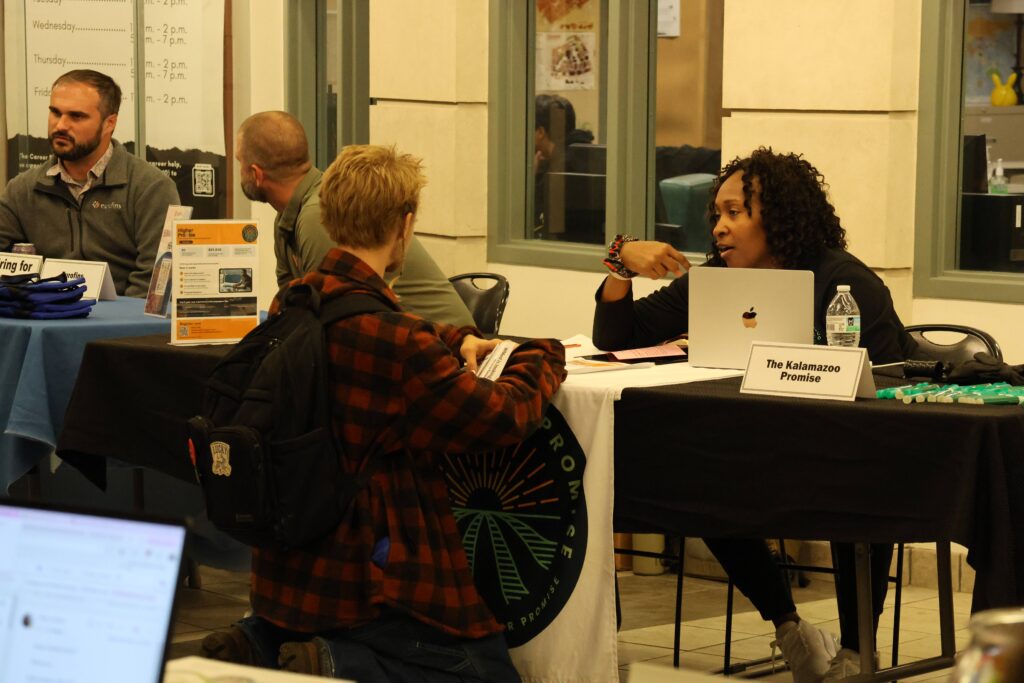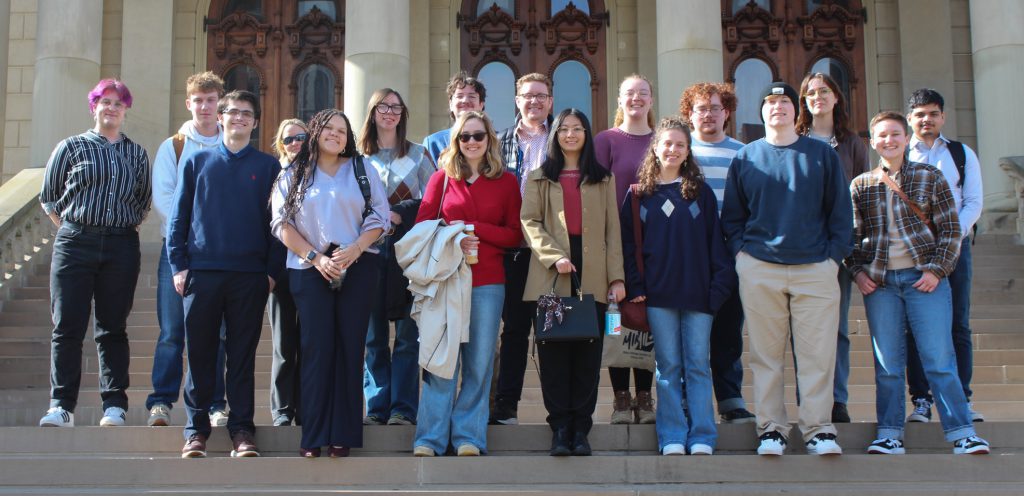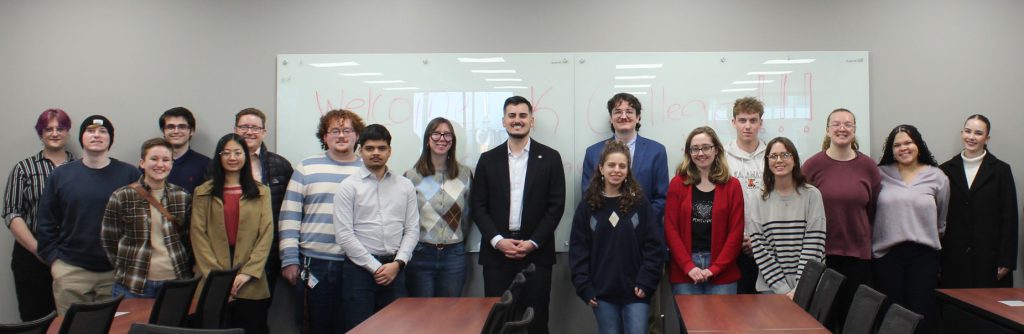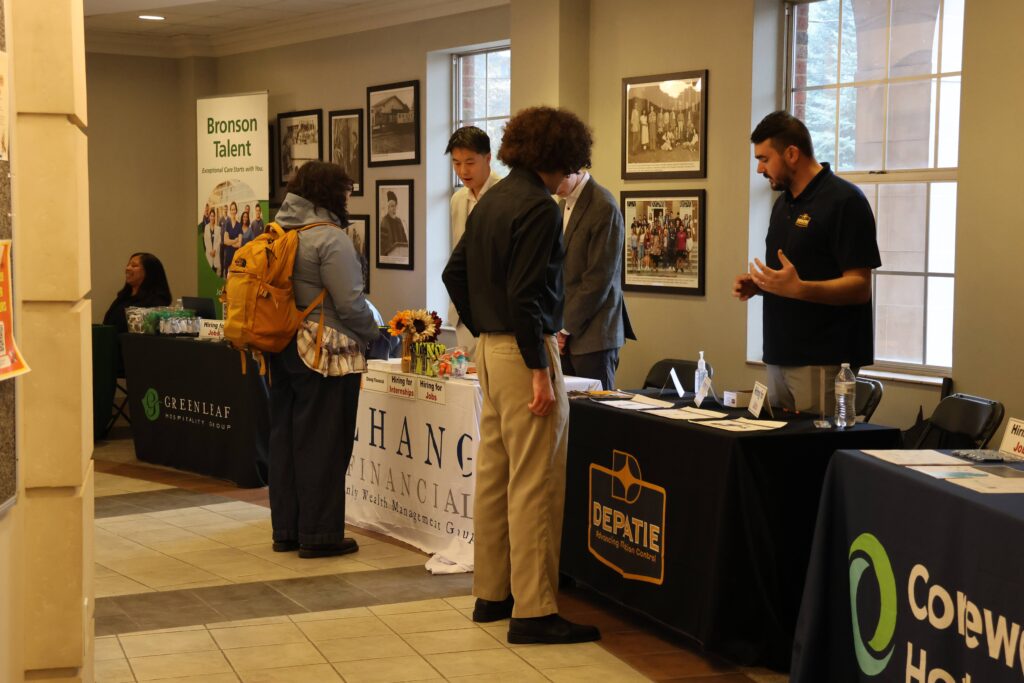
Despite a rainy Wednesday afternoon, 60 students made their way to the Employer Connection Fair on September 30 to meet with representatives from 13 organizations spanning healthcare, nonprofit, finance, education, energy, and other industries.
The fair gave students a chance to have real conversations with employers in a low-pressure setting (some came directly from team practices). Students collected information, asked questions, learned about different paths after graduation, and made personal connections. Many of the employers in attendance have open summer internships posted in Handshake!
Senior Jazmin Ramos said, “I really enjoyed seeing K-Alumni during the connection fair, it was easy to connect and ask about life after K. I asked about how their experiences during their academic years shaped their professional careers now. I enjoyed talking to Consumers Credit Union about their work environment and jobs available for new grads!”
For employers, the event was also an opportunity to meet K students and learn more about the diverse experiences and skillsets they bring to the workplace. Following the fair, several participating employers shared positive feedback about the students they met and the conversations they had. One said, “It was very well organized, well attended and we met some great potential candidates!”
Connection Fairs happen Week 3 of each term, and are one of the ways the CCPD helps students connect what they are learning at K with opportunities beyond. Stay tuned for Winter Term’s Employer Connection Fair on what is the date and Spring Term’s Graduate School Fair on what is the date.