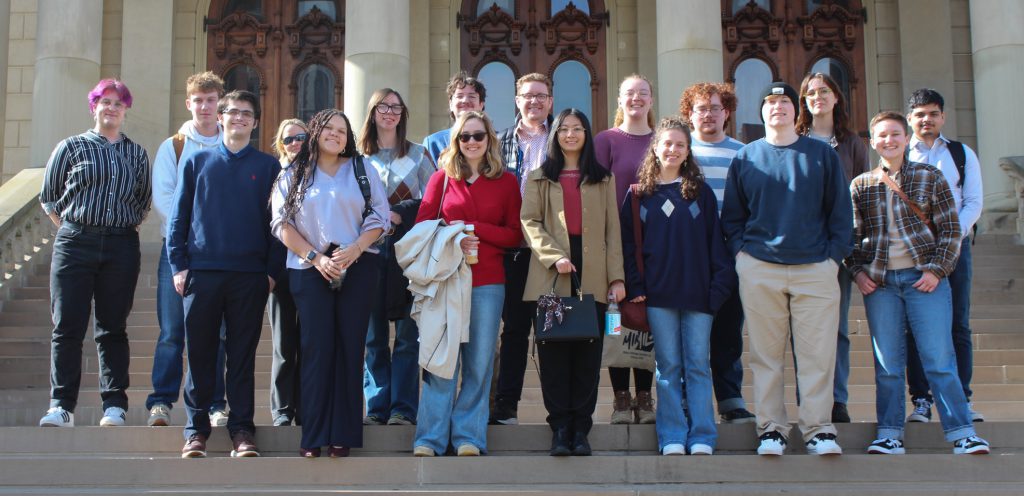
An ongoing partnership growing in a new direction 

Over the last several years, the CCPD has built a strong partnership with the men’s football program, thanks in large part to the leadership and support of then Head Football Coach Jamie Zorbo. During that time, we collaborated on a range of workshops, everything from resume writing to job and internship searching, networking, and more. Since Coach Zorbo’s transition into the role of Athletics Director, that partnership has only continued to grow. 

This fall, the CCPD expanded our work with Athletics by launching a new workshop series called “The Athlete Advantage.” These sessions had two simple goals: to help student-athletes see the career value of skills they build every day in their sport (discipline, teamwork, resilience, leadership) and teach them how to communicate those strengths clearly on a resume. During the sessions, the athletes viewed a presentation explaining the link between their athletic skills and career readiness skills, then were given the opportunity to apply what they just learned by completing the new Basic Resume Module in our Career Connection Toolkit and practice translating their athletic experience into employer-ready language.  

Athletic skills are career readiness skills 

In 2014, the National Association of Colleges and Employers (NACE) conducted a large national study across industries and employer types to identify the most important career readiness competencies for early-career professionals. The result was a framework of eight competencies: career and self-development, communication, critical thinking, equity and inclusion, leadership, professionalism, teamwork, and technology. 

These competencies map closely to the skills athletes develop over years of practices, competitions, and team leadership roles. Discipline and resilience align with professionalism. Teamwork and leadership match two of the competencies outright. And qualities like adaptability, time management, and the ability to perform under pressure appear across multiple competency areas. 

Simply put: the skills that make strong athletes are the same skills employers are actively seeking. Our goal is to help students recognize that connection and feel confident about naming and demonstrating those strengths. 

Progress so far and where we’re headed 

This fall, the CCPD led three Athlete Advantage workshops, reaching 234 student-athletes across multiple teams. Our goal is to reach every student-athlete by the end of this academic year. 

Looking ahead, we will continue offering these workshops to incoming first-year athletes and expanding the resources available to teams and coaches. The focus remains the same: helping students understand the real-world value of their athletic experience and teaching them how to showcase those skills effectively on their resumes and in conversations with employers. 

100+ Conversations – “Not as intimidating as I thought”

During KConnect Week, more than 100 career conversations unfolded between Kalamazoo College students and alumni. In all, 106 meetings connected 59 students with 38 alumni across the country. For many students, these short, 20 minute Hornet Huddles offered something essential in the career development process: direct, candid access to someone who once sat exactly where they are now. Students described the experience as energizing and humanizing, noting that the conversations felt more like genuine mentorship than formal interviews. What surprised them most was how approachable the alumni were. One student summed it up simply: “Made me realize alumni are not that intimidating to talk to.”

For alumni, the impact went both ways. Many enjoyed hearing what current students are curious about, what challenges they are thinking through, and how their own career paths with all their pivots and surprises could offer reassurance. Several mentioned that the small group format allowed space for real conversation, even within a single 20 minute session. The topics covered a wide landscape: scientific research, law, public policy, marketing, finance, technology, education, communications, nonprofit leadership, and more. Alumni shared insights from government agencies, startup environments, hospitals, laboratories, courtrooms, schools, and global companies. Students used the time to explore majors, test assumptions, and ask practical questions about internships, first roles, identity in the workplace, and how to get started.

Many conversations also sparked a next step, whether that was an invitation to connect again on LinkedIn, an offer to review a resume, or a suggestion to reach out to someone else in the alum’s network. The ripple effects of a single meeting will continue long after KConnect Week. Hornet Huddles continue to show the strength of a career community built on real people and real conversations. Students benefit from seeing firsthand how K alumni build lives and careers after graduation. Alumni benefit from reconnecting with the campus community and supporting emerging professionals in fields they care deeply about.

As KConnect grows, so will the opportunities to make these conversations easy and accessible. The goal remains the same: to help students try things and talk to people, and to ensure that every Hornet has access to the guidance, perspective, and encouragement that comes from another Hornet saying, “I have been there. Let’s talk.”

For students and alumni alike, joining KConnect is an easy way to stay connected to this community year-round. You don’t need to participate in Hornet Huddles to take part. Students can explore alumni profiles and reach out for advice whenever they’re ready, and alumni can make themselves available for future conversations in whatever way fits their schedules. Anyone can get started at kzoo.alumnifire.com.

A modern solution to a legacy challenge – Career Connection Toolkit

During summer 2025, the CCPD kicked off a new project we’re genuinely excited about: the Career Connection Toolkit. It grew out of two big questions we’ve been wrestling with for a long time.

First: How do we help students keep building career development skills when none of our services are required? We know these skills matter, a lot, for launching confidently into life after K, but it’s easy for students to miss them simply because they never cross paths with us.

Second: How do we teach these skills when every student starts from a different place? Some arrive having never created a resume, while others grew up around professionals who had them networking in high school. Most sit somewhere in between.

The Career Connection Toolkit is our response to both challenges. It’s flexible, it’s accessible, and it moves us closer to our long-term goal of embedding career everywhere.

Built for real student lives

The Career Connection Toolkit is a collection of self-paced, asynchronous modules that teach core career skills. Everything is on Moodle and is available 24/7. No appointments, no waitlists, and no hoping a CCPD workshop happens to be offered in the right class at the right time.

You can jump into the Toolkit directly through the CCPD website, and it will keep growing over time. Each module focuses on one key skill and is broken into short, digestible lessons. A typical lesson includes:

  • a short written overview to explain the concept
  • an interactive activity to apply the skill in real time
  • a reflection checklist to help you lock in what you learned

Most lessons take about 7–12 minutes, and a full module can be completed in under an hour.

This structure helps in a lot of ways:

  • It’s flexible. Students can spend 10 minutes learning something useful and come back later without losing momentum.
  • It works in classrooms. Faculty can pair a full module with a single class session without reworking an entire syllabus.
  • It supports different learning styles. Written content, examples, and hands-on activities give students multiple ways to engage.

Right now, the Toolkit includes three modules; a basic resume module, an advanced resume module, and a Career Conversations (informational interviews) module. They’re live for students now, and we’re actively collecting feedback as we continue improving and planning the next round of modules.

If you’d like to explore, assign, or share your thoughts on the Toolkit, you can find everything at career.kzoo.edu/cctoolkit.

Moving forward

The Toolkit is one more way we’re working to make career learning a shared responsibility across campus. We’re grateful for partners like Athletics who have jumped in early, and we’re eager to collaborate with anyone who sees value in helping students connect their experiences to their futures. If you’d like to explore the modules or offer input as we develop new ones, we’d love to hear from you.

Building First-Year Confidence: Career Advisors Visit 15 Seminars This Fall

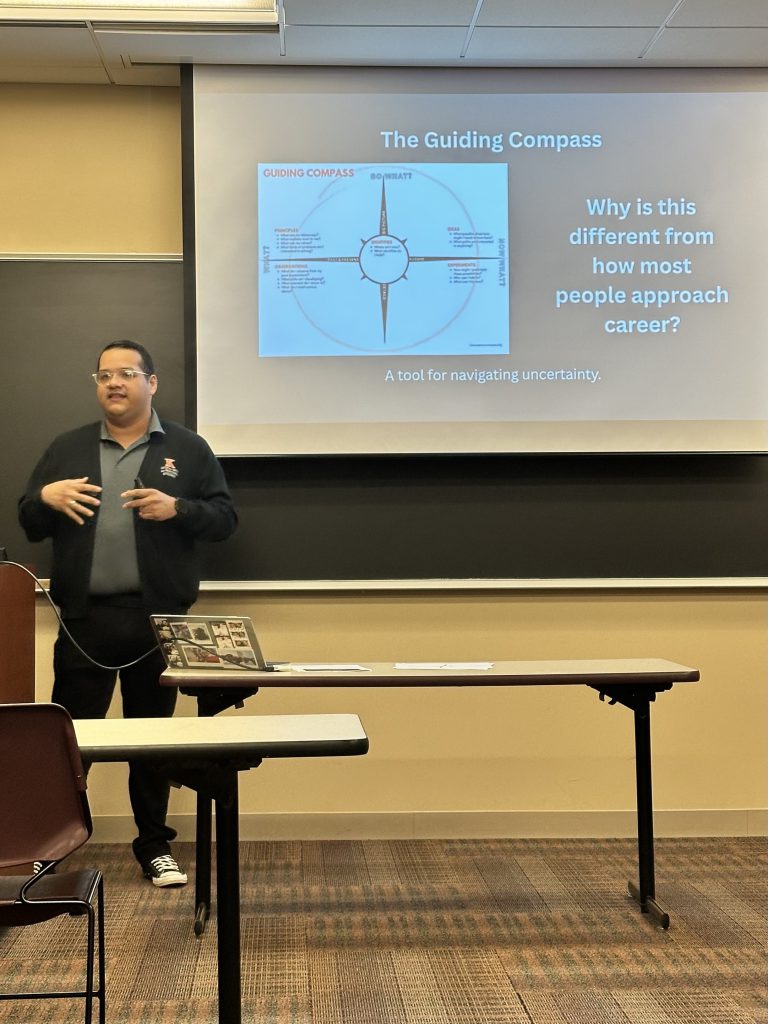
This fall, our Career Advisors brought resume fundamentals directly into the classroom, visiting fifteen First-Year Seminars to deliver a short, practical presentation called “Building Your First College Resume: The Basics Every College Student Needs to Know.”

The advisors walked students through why resumes matter early, what counts as experience (far more than most first-years expect), and where to find step-by-step guidance in our Career Connection Toolkit. The toolkit’s Basic Resume module (complete in under an hour) helps students build a polished college-level resume from scratch, with templates and practice activities built in.

Career Advisor Eric shared that the visits made an impact:
“It was a super engaging way for first years to become familiar with the CCPD! I wish that I had been introduced to the CCPD my freshman year. My presentations were a great way to spark awareness for how a resume can be built using CCPD resources.”

We’re grateful to our Career Advisors for helping new students take their first steps toward exploring opportunities at K. And, we’re grateful to our First Year Seminar Instructors for welcoming our staff in! Students can find the resume module and more at career.kzoo.edu/CCToolkit.

Students Lead Civic Government Panel on Careers in Public Service

Moderator, other panelists, and student attendees listening to panelist, Christina Anderson '98.

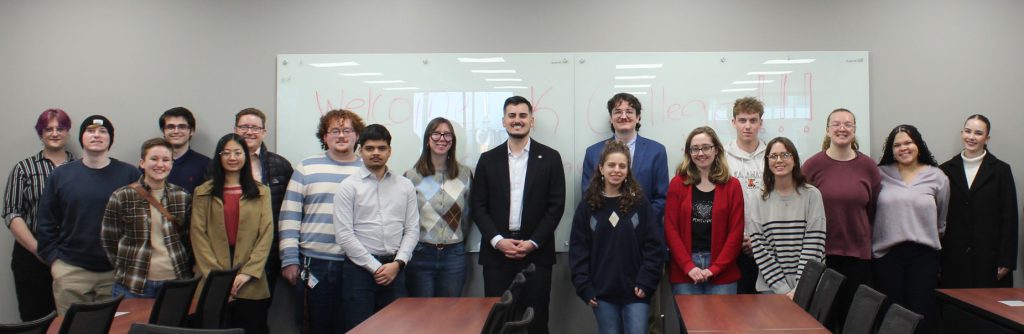
Political Science DSA Hollis Masterson ’26 and student leader Libby McFarlen ’26 partnered with Dr. Justin Berry, the Center for Civic Engagement, KVotes and the CCPD to host a dynamic conversation on civic careers last Tuesday with three Kalamazoo city leaders who also have strong ties to the K community.

The panel featured Vice Mayor Jeanne Hess, Chief Operating Officer Laura Lam ’99, and City Planner and Deputy Director of Community Planning and Economic Development Christina Anderson ’98. Each shared personal stories and insights about discovering purpose through public service.

Masterson, who moderated the discussion, asked how each panelist found their way into city government. Anderson described starting as a volunteer on the zoning board before joining the City of Kalamazoo staff. Lam applied for a role with the City, hoping to return to her hometown and contribute to its growth. Hess spoke about her deep ties to Kalamazoo and how the former mayor encouraged her to run for City Commission after retiring from teaching and coaching at K.

As the discussion shifted to building skills and managing challenging work environments, the panelists offered advice rooted in lived experience. “Even a bad internship or job gets you closer to what you want,” Anderson told students. She went on to add that “any job has a learning curve… you need to be in it long enough to see if it’s going to work for you.” Hess added, “I always said as a coach, ‘you either win or you learn.’”

When asked what cities look for in candidates, the panelists emphasized the mindsets and habits that define effective public service. They spoke about listening carefully, asking thoughtful questions, and engaging with community members in ways that build trust. Strong civic leaders, they noted, show up, collaborate well, follow through, and stay grounded in purpose. As Lam put it, “If you go into government, you need to be crystal clear about your ‘why.’”

The event captured the best of K’s collaborative spirit. Students, alumni, faculty, and community partners came together to explore how liberal arts learning can lead to real-world impact. By organizing and leading the panel, Masterson and McFarlen created space for real conversation and connection, encouraging students to imagine careers in public service, or, if not, how to stay involved through continued civic engagement. As Anderson noted, “Wherever you go, you are a member of that community. And it is your duty to be an active member of your community…to bring your light to that space.”

Advancing Career Readiness Through the Liberal Arts: Building a Career Ecosystem

Kalamazoo College doesn’t just prepare students for the job market: we prepare them for a world in motion. In an era of rapid change and rising skepticism about higher education, students and families want more than promises. They want to see how a liberal arts education leads to real opportunity, meaningful work, and lifelong adaptability. They expect colleges to connect learning with life after graduation.

This plan is how we do that. Learn more at CCPD Strategic Plan 2025-2028.

Bad Ideas First: What Thomas Bentley ’25 Learned by Starting Before He Was Ready

“The value in these original iterations was not in making something good… but rather in that I took a step away from doing nothing and a step towards doing something.” — Thomas Bentley ’25

Thomas Bentley ’25 did not get his position with the Minnesota Twins by getting it right the first time. Actually, he discusses how a number of his initial baseball analytics projects were cumbersome, inefficient, and downright bad. But they were the building blocks.

In his blog post, The First Step and 3 Bad Ideas, Thomas reflects on the power of acting before you’re ready. If it was a messy spreadsheet, a failed Twitter thread, or a poorly wighted model for pitching, every failure served to instruct him… and move forward.

If you’ve ever delayed starting something because you weren’t “good enough yet,” this is your reminder to try anyway.

Read the full post here.

Curious About Working Abroad? These K Alumni Are Living It!

On Thursday, May 1, 2025, students had the chance to explore life and work beyond U.S. borders through the virtual event What’s it like to Work Abroad?

Co-sponsored by the German Studies Department and the Center for Career and Professional Development, the event featured three Kalamazoo College alumni currently living and working in Europe:

    Dr. Kathryn Sederberg of the German Department moderated the hour-long conversation, which covered everything from navigating international job markets to adapting to different workplace cultures… and the unexpected joys and challenges of building a life abroad. Here are some insights shared by the panelists:

    “It’s very courageous and difficult to start a life in a different country, different language, different culture. So it’s tough. You have to be quite resilient… Getting your foot in the door, maybe starting small, but you get your experiences, you get your connections, and then you kind of, you know, head up the ladder.– Jane

    “I think the biggest difference between German and US culture is in the US, even if you have vacation days and sick days, there’s sometimes an expectation that you don’t fully use that… Here in Germany, there’s an expectation that you do use all of your holidays and that when you’re outside of working hours, you are outside of working hours.” – Isaac

    If you’re serious about working abroad, be very clear about what you qualify for in terms of residency and work permits. I get frustrated when people don’t know what visa they qualify for, it shows me they aren’t prepared, and it’s a red flag for what they might be like as an employee. – Emily

      Whether you’re dreaming of working in Berlin or just curious about post-grad life outside the U.S., this conversation is full of insight and inspiration! Missed the event? You can watch the full recording on our YouTube channel.

      Career Myths Busted: A “Major” Misconception 

      It’s a common myth: choose the “right” major, and your dream career will naturally follow. But the truth? Your major is just one part of your career story. Many successful professionals work in fields that are so-called “unrelated” to their undergraduate degrees. 

      What really matters? Transferable skills. The critical thinking you develop in a philosophy major? Great for business strategy. The research skills from a history major? Perfect for marketing. The communication skills from an English major? Valuable in every profession. The learning outcomes of a Kalamazoo College education? Exactly what NACE says employers are looking for!

      A study by the Association of American Colleges and Universities found that employers prioritize skills over majors: 

      “Employers say they place the greatest value on demonstrated proficiency in skills that cut across all majors—such as written and oral communication, teamwork, ethical decision-making, critical thinking, and the ability to apply knowledge in real-world settings. In fact, most employers say these cross-cutting skills are more important to an individual’s success than their undergraduate major.” 

      Falling Short? College Learning and Career Readiness, AACU, 2015 

      Of course, some careers require specific degrees (medicine, engineering, etc.), but for most fields, your major is just one piece of the puzzle. What truly sets you apart is the skills you’ve built both in and out of the classroom–in short, experience. Class group projects, individual research papers, athletics, internships, campus leadership, and networking all help shape your career path—and that path isn’t a straight line (which is a good thing!). 

      So, as we reflect after Declaration of Major Day, remember that your major doesn’t define your destiny. Explore your next steps: 

      • Check out the Explore Your Path Beyond K dashboard to see where K grads from 2016-2023 have landed. 
      • If/when you check out the What Can I Do With This Major? resource to discover career possibilities, remember, it’s NOT an exhaustive list, but just a possible place to start. 
      • Take a career assessment to better understand your values, interests, and strengths. 
      • Connect with alumni in your major to hear their career stories. 
      • Visit the Career Studio or schedule a career coaching appointment to chat with a peer or professional staff member. 

      🚨 Deadline Extended – Job Shadow Opportunities!

      The application deadline has been extended for the following job shadow hosts, who still have spots for student matches.

      If you missed the first deadline, this is your chance to connect with professionals during spring break (March 19-28, 2025). These hosts come from diverse fields, so there may be a perfect match for your interests.

      Deadline to apply for these opportunities: next Monday, February 3 at 11:59 p.m.

      P.S. If you already applied— we will be in touch as soon as possible. We know you may be anxious to solidify your spring break plans.